

 Editer
The Evolving Landscape of Higher Education in America
\nThe pursuit of higher education in the United States has undergone a significant transformation, with online learning emerging as a powerful and increasingly prevalent alternative to traditional brick-and-mortar institutions. This shift is driven by a confluence of factors, including technological advancements, evolving student needs, and a desire for greater flexibility. As students and educators alike grapple with these changes, understanding the nuances between online and traditional educational models becomes paramount. This comparative analysis will delve into the distinct characteristics, advantages, and challenges of each, offering insights for prospective students and institutions navigating this dynamic educational terrain. For those seeking guidance on academic support, discussions around services like those found at https://www.reddit.com/r/Essay_Tips_Tricks/comments/1sak4yc/psychology_essay_writing_service_legit_or_am_i/ highlight the evolving support structures available to students in this new environment.
\n\nSynchronicity and Structure: The Rhythms of Learning
\nOne of the most striking differences between online and traditional learning lies in their inherent structures and the temporal rhythms they impose. Traditional education typically operates on a fixed schedule, with in-person lectures, seminars, and laboratory sessions occurring at designated times. This synchronous approach fosters direct interaction with instructors and peers, encouraging immediate clarification of doubts and facilitating spontaneous discussions. For many students, this structured environment provides a sense of accountability and routine, which can be beneficial for time management and academic discipline. For instance, a student enrolled in a traditional engineering program at MIT would experience a curriculum built around scheduled lab work and in-person design critiques, fostering a collaborative and hands-on learning experience. The physical presence of classmates and faculty can also contribute to a stronger sense of community and belonging, fostering networking opportunities and lifelong friendships. Statistics from the National Center for Education Statistics (NCES) indicate that while online enrollment has surged, a significant portion of students still prefer or require the structured, in-person environment for certain disciplines or personal learning styles.
\n\nFlexibility and Accessibility: Bridging the Distance
\nConversely, online learning champions flexibility and accessibility, catering to a diverse range of learners who may face geographical, professional, or personal constraints. Asynchronous online courses, a hallmark of this modality, allow students to access lectures, readings, and assignments at their own pace and on their own schedule. This is particularly advantageous for working professionals pursuing advanced degrees, parents balancing family responsibilities, or individuals living in remote areas far from educational institutions. For example, a student in rural Montana could pursue a Master’s in Business Administration from a top-tier university in New York without relocating, leveraging online platforms for lectures and virtual collaboration tools for group projects. This democratizes access to quality education, breaking down traditional barriers. However, this flexibility demands a high degree of self-discipline and motivation. Students must proactively manage their time, stay organized, and actively engage with course materials and online communities to succeed. The rise of hybrid models, which blend online and in-person components, further exemplifies the trend towards offering more adaptable educational pathways.
\n\nEngagement and Interaction: The Digital vs. The Physical
\nThe nature of student engagement and interaction also presents a key point of comparison. In traditional classrooms, face-to-face interactions are organic and immediate. Students can gauge non-verbal cues from instructors and peers, participate in spontaneous Q&A sessions, and engage in lively debates that are often enriched by the shared physical space. This direct human connection can foster deeper understanding and a more immersive learning experience. Conversely, online learning necessitates intentional strategies to cultivate engagement. Discussion forums, video conferencing, and collaborative online tools are employed to replicate the interactive aspects of a traditional classroom. While these tools can be highly effective, they require a different kind of engagement. Students must be proactive in contributing to online discussions, seeking out virtual interactions, and utilizing the available technological resources. For instance, a virtual study group using shared document editing and video calls can be as effective as an in-person one, but it requires more deliberate coordination. The challenge for online educators lies in designing courses that foster a sense of community and encourage active participation, overcoming the potential for isolation that can arise from remote learning.
\n\nOutcomes and Perceptions: Measuring Success in a New Era
\nEvaluating the outcomes and perceptions of online versus traditional learning is a complex endeavor. While early concerns about the rigor and legitimacy of online degrees have largely subsided, perceptions continue to evolve. Many reputable institutions now offer online programs that are on par with their traditional counterparts in terms of curriculum, faculty, and academic standards. Employers are increasingly recognizing the value of online degrees, especially from accredited institutions. However, the perceived value can still vary by industry and employer. Furthermore, the learning outcomes can differ based on the student’s learning style and the quality of the program. Some studies suggest that online learners may develop stronger independent learning skills, while traditional learners might benefit more from the structured environment and immediate feedback. A recent survey by the Eduventures research firm indicated that while a majority of students find online learning effective, a significant minority still believe that traditional, in-person instruction leads to a more comprehensive educational experience. Ultimately, the success of either modality hinges on the individual student’s commitment, the quality of instruction, and the specific learning objectives being pursued.
\n\nCharting Your Educational Course
\nThe choice between online and traditional learning in the United States is not a one-size-fits-all decision. Both modalities offer distinct advantages and present unique challenges. Traditional education provides a structured, synchronous environment fostering direct interaction and a strong sense of community. Online learning, on the other hand, offers unparalleled flexibility and accessibility, empowering individuals to pursue education regardless of their circumstances. As the educational landscape continues to evolve, understanding these differences is crucial for making informed decisions. Prospective students should carefully consider their personal learning style, career goals, and available resources. Institutions, in turn, must continue to innovate and adapt their offerings to meet the diverse needs of the modern learner, ensuring that both online and traditional pathways provide a high-quality and effective educational experience.

 citybeatnewscommunication@gmail.com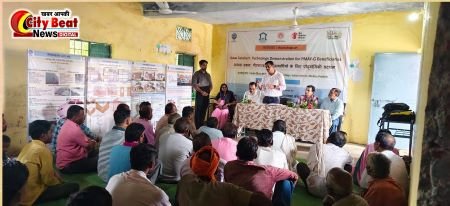






%20लाभार्थियों%20के%20लिए%20‘आवास%20सक्षम’%20प्रौद्योगिकी%20प्रदर्शन%20का%20आयोजन)